Categories
Legal News, Real Life Real Estate, Selling / Buying, Straight Talk, What's Jeff's Take on this?Published October 9, 2026
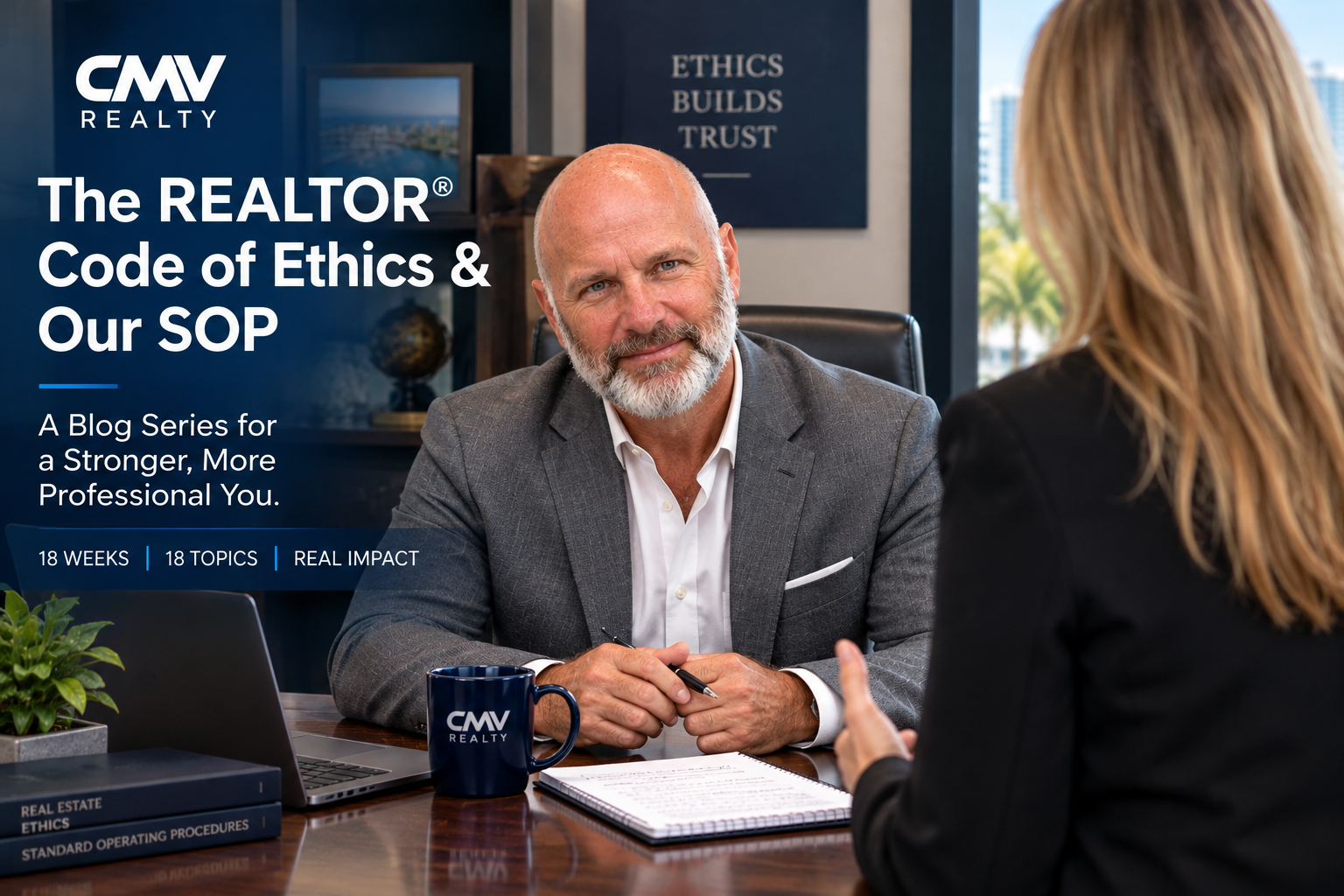
The REALTOR® Code of Ethics: What It Means in the Real World (1 of 18)

After more than 30 years in real estate, one thing has become clear: knowing the rules and knowing how to apply them are two different things.
Every REALTOR® agrees to abide by the National Association of REALTORS® Code of Ethics. But how often do we stop and think about what those rules actually mean when we're dealing with a difficult seller, a demanding buyer, another agent who isn't cooperating, or a transaction that isn't going the way we expected?
That's where the Code matters most.
Not when everything is going smoothly. When there's pressure, money on the line, competing interests, and a decision that isn't quite as simple as it first appears.
That's why I'm starting this series.
The Code is more than something you agree to when you join
The REALTOR® Code of Ethics isn't simply a document to read once, acknowledge, and put aside. It establishes professional obligations that affect how REALTORS® work with clients, customers, other real estate professionals, and the public.
The Code contains 17 Articles, supported by Standards of Practice that provide additional detail about how those obligations apply.
Some of the principles seem straightforward. Treat people honestly. Protect your client's interests. Don't misrepresent a property. Respect another professional's contractual relationships.
But real estate rarely comes with a set of perfect circumstances.
What happens when a seller insists on an asking price you believe is unrealistic? What if you learn something about a property that could affect a buyer's decision? How quickly should an offer be presented? What can you say about another agent? And where is the line between protecting your client's interests and treating the other party fairly?
These aren't just classroom questions. They come up in real transactions.
And the answer isn't always as simple as saying, "I was just doing what my client wanted."
Representing a client carries responsibilities. It doesn't give a REALTOR® permission to ignore professional obligations.
What this series will cover
Over the next 17 articles, we'll work through the Code one Article at a time.
We won't simply repeat the language and move on. The goal is to explain what each Article means in everyday practice, examine situations REALTORS® may encounter, and discuss how an experienced professional should approach them.
We'll look at subjects including:
- Client loyalty and honesty. How do you put your client's interests first without misleading someone else?
- Disclosure and misrepresentation. What do you know, what should you communicate, and what must you never conceal?
- Cooperation between brokers. What does cooperation require, and where are its limits?
- Conflicts of interest and compensation. When should financial interests and payment arrangements be disclosed?
- Fair housing and professional competence. Are you treating people fairly, and are you qualified to handle the work you're accepting?
- Advertising and professional conduct. Are your statements accurate, including what you publish online?
- Client relationships and disputes. How should REALTORS® handle disagreements, exclusive representation, and covered disputes with other professionals?
We'll also look at the Standards of Practice associated with each Article. Those details matter because a broad ethical principle and a specific professional obligation aren't always the same thing.
The purpose is not to turn every transaction into a legal exercise. It's to help REALTORS® recognize the issues before they become problems.
Good intentions aren't always enough
I've seen how experience changes the way you look at this business.
Early in a career, it's easy to focus on getting the transaction done. Get the listing. Find the buyer. Negotiate the deal. Get to closing.
Experience teaches you to look beyond the closing.
How was the client advised? Were expectations set honestly? Was important information handled properly? Did everyone understand what had been agreed to? And did the professional conduct of the people involved hold up when things got difficult?
A closed transaction doesn't automatically mean every decision along the way was the right one.
And a disagreement doesn't automatically mean someone violated the Code.
That's an important distinction. The Code isn't a weapon to use against another agent whenever a deal goes sideways. Nor should it be treated as a technicality to work around when compliance becomes inconvenient.
It deserves to be understood, applied carefully, and taken seriously.
One important distinction
This series will focus on the REALTOR® Code of Ethics and its Standards of Practice, using the 2026 edition as our reference.
The Code establishes ethical obligations for REALTORS®. Florida real estate law, other applicable laws, and brokerage policies may impose separate or additional requirements. They aren't interchangeable, and we'll be careful not to confuse them.
These articles are intended to educate and encourage professional discussion, not replace legal advice or an association's formal interpretation of the Code.
Why should you follow this series?
Whether you've been in real estate for six months or 30 years, there's value in revisiting the standards that govern the profession.
For newer agents, this is an opportunity to build sound habits before bad ones take hold.
For experienced agents, it's a chance to reconsider familiar situations, challenge assumptions, and make sure the way we do business still meets the standards we agreed to uphold.
And for consumers, understanding the Code offers a better picture of what they should expect from a REALTOR®—and why professional conduct matters just as much as marketing, negotiating, and getting a property sold.
The first article in the series will examine Article 1: Your Client Comes First. But That Doesn't Mean Everyone Else Comes Last.
We'll look at what it really means to protect a client's interests while still treating all parties honestly—and why those two responsibilities must work together.
Watch for the next installment. The Code has a lot more to say about the real estate business than many people realize.
After all, professionalism isn't measured only by the deals you close. It's also measured by the decisions you make along the way.

Jeff Chenore
Broker/Owner CMV Realty | Chenore Group | CMV Realty LLC
or another way