
Categories
Legal News, Selling, Selling / Buying, What's Jeff's Take on this?Published June 17, 2026
The Fed Hold: Why Today's Interest Rate Decision Won’t Change Your Mortgage

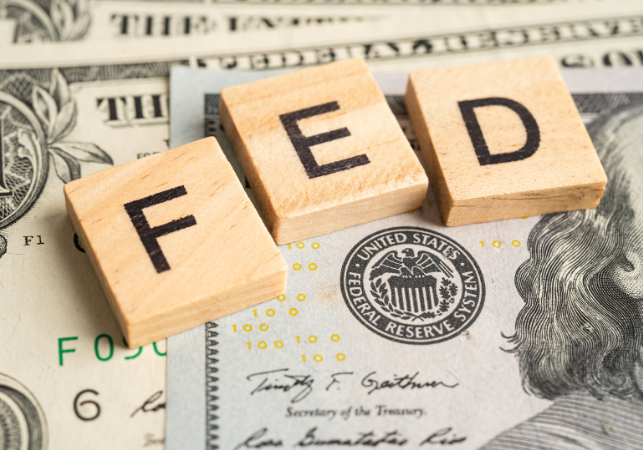
Today, June 17, 2026, all eyes are on Washington. The Federal Open Market Committee (FOMC) is concluding its highly anticipated June meeting, marking the debut of newly appointed Federal Reserve Chair Kevin Warsh.
Wall Street analysts and economic trackers are in rare, total agreement: the likelihood of a change in the interest rate today is virtually zero. Futures pricing via the CME FedWatch tool shows a staggering 97% to 99% probability that the Fed will leave its benchmark interest rate exactly where it is, holding steady at the current range of 3.50% to 3.75%.
But while the financial media ramps up the drama surrounding the 2:00 PM ET announcement, as a real estate advisor, my responsibility is to provide the Bottom Line Up Front (BLUF): Today's Fed decision is already priced in by the market. More importantly, what the Fed does with its benchmark rate today does not dictate what you will pay for a home mortgage tomorrow.
To make the smartest moves in the South Florida real estate market, we need to untangle the myth from the math.
The Great Misconception: The Fed Rate vs. Mortgage Rates
Most people hear that the Fed is holding interest rates steady and automatically assume that mortgage rates will remain perfectly frozen as well. This is a fundamental misunderstanding of the financial grid. The Federal Reserve does not set mortgage rates.
- The Fed Funds Rate: This is a short-term, overnight lending rate that banks charge each other for reserve balances. It directly influences short-term consumer debt, like credit cards, adjustable-rate lines of credit (HELOCs), and auto loans.
- The 30-Year Fixed Mortgage Rate: This is a long-term debt instrument. It is tied directly to the investor yield of the 10-Year U.S. Treasury Bond and broader tracking of long-term inflation expectations.
Waiting to buy a home based entirely on the Fed’s calendar can backfire spectacularly. History shows us that mortgage rates frequently drop during periods when the Fed keeps rates steady—or even when they hike them—as long as the bond market feels confident that inflation is being contained. Conversely, if the Fed hints at future economic instability today, bond yields could spike, pulling mortgage rates up with them by tomorrow morning, even though the Fed itself didn't move a muscle.
2026 Macroeconomic Q&A: Navigating the New Fed Era
Q: If the rate hold is a done deal, why is Wall Street treating today like a turning point?
A: The suspense sits entirely within the accompanying Economic Projections and the debut of the new Chair. Back in March, the Fed's "dot plot" penciled in a rate cut for late 2026. However, with headline annual inflation ticking back up to 4.2% in May, policymakers are widely expected to delete that projected cut today, signaling a "higher-for-longer" baseline.
Q: Who is Kevin Warsh, and will his leadership change how interest rates are communicated?
A: New chair Kevin Warsh was sworn in as Fed Chair in May 2026. He has historically been a vocal critic of the Fed's over-reliance on "forward guidance"—the practice of explicitly telling the market what the central bank plans to do months in advance. Economists expect him to begin scaling back this language today, opting for a less predictable, purely data-dependent approach that could introduce short-term bond market volatility.
Q: How do developments in the Middle East factor into today's rate decision?
A: The FOMC specifically noted that ongoing geopolitical developments in the Middle East are contributing to a high level of uncertainty about the economic outlook. While energy supply shocks have kept headline inflation elevated, recent stabilization in the futures curve gives the Fed a reason to pause and observe data rather than shifting rates immediately.
Market Perspective: Clarity for South Florida Buyers and Sellers
The sophisticated wealth-builders we work for don't construct their real estate timing around macro-speculation. They focus on localized absorption rates and personal timelines. We monitor these capital market shifts to ensure our clients maintain a position of strength:
- For Sellers: Buyers have officially moved past "rate shock." They have accepted that the mid-6% mortgage range is the baseline for the foreseeable future. Demand for single-family homes remains highly competitive, with new pending contracts surging 8% year-over-year across Florida. Holding your property off the market waiting for a lower rate environment means missing out on the highest concentration of motivated summer buyers.
- For Buyers: The current stabilization of rates has broken the "Rate-Lock" that kept many sellers sidelined. Active inventory in Broward County is up nearly 9% year-over-year. This provides you with an abundance of choice and negotiation leverage that was completely absent during the frenzy of previous cycles.
Jeff's Perspective
How would you feel if you paused your family's moving plans for six months waiting for a Fed rate cut, only to realize that mortgage rates actually increased because bond investors got nervous about inflation? Just imagine the peace of mind that comes from securing your piece of South Florida equity today—at a negotiated price—with the strategy to simply refinance the loan if the macroeconomic landscape shifts in your favor later.
The bottom line is: The Fed will hold the line today, and the market has already moved on. Focus on the real estate asset under your control, utilize local data truth over national headlines, and navigate your next chapter with absolute clarity.
Want to know how your purchasing power stacks up against today's data? Let's meet in person or by ZOOM and let's map out your strategy.

Jeff Chenore
Broker/Owner CMV Realty | Chenore Group | CMV Realty LLC
or another way