Categories
Selling, Real Life Real Estate, Selling / Buying, Straight TalkPublished October 3, 2026
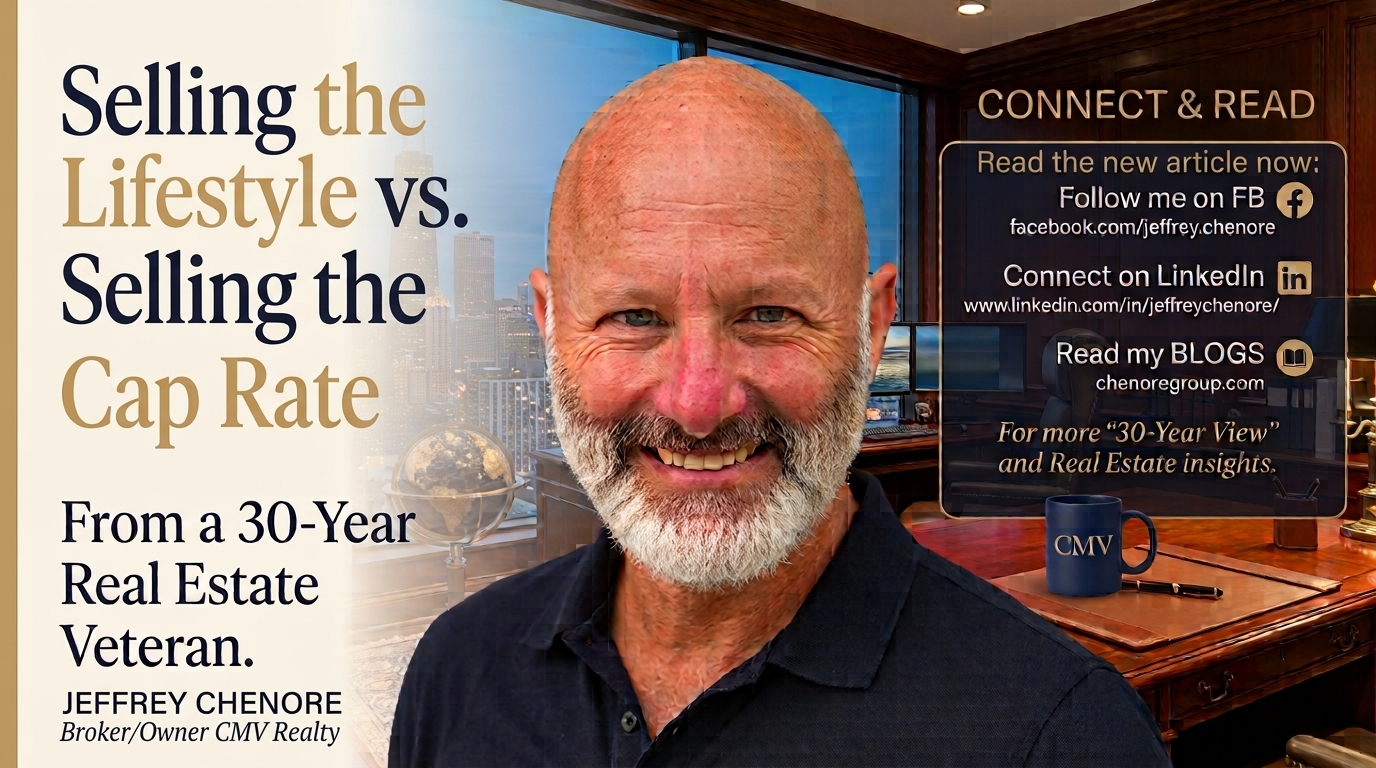
Selling the Lifestyle vs. Selling the Cap Rate: How We Position High-End Homes for Business Minds

When you look through typical luxury real estate marketing, it all starts to sound the same. Most listing agents focus on the obvious surface details: "chef’s kitchens," "resort-style pools," and "sprawling primary suites."
That playbook works fine for standard emotional buyers who purchase purely based on mood boards and architectural finishes. But as a listing agent representing a premier South Florida asset, relying solely on consumer fluff is a huge mistake—especially when your target buyer is an entrepreneur, a corporate executive, or a seasoned investor.
Business-minded buyers don't turn off their financial instincts when shopping for a home. They might love a stunning sunset over a wide lake or canal or a five-car garage, but before they write an offer on a multi-million-dollar property, they run the asset through an internal stress test. They look at risk, capital preservation, holding costs, and long-term liquidity.
At CMV Realty, we handle both commercial deals and residential properties across South Florida. That crossover gives us a distinct edge when positioning our sellers' properties. When we take on a luxury listing or a custom estate in Pinecrest, Plantation Acres, or North Miami Beach, we don't just sell the lifestyle—we build and present the business case.
Moving Beyond Basic Staging: How We Position Your Equity
Most listing brokers rely heavily on surface-level appeal. They host a wine tasting, print a glossy flyer, and write florid descriptions about peaceful mornings on the lanai.
While high-end presentation matters, sophisticated buyers look straight through the staging furniture. They want to see how the property performs as an asset.
When we list a luxury estate, we capture the business buyer by framing the property around three core financial pillars:
1. Replacement Cost (The Build vs. Buy Equation)
In today's South Florida market, building a custom estate from scratch involves rising construction costs, strict municipal permitting, and supply chain delays that can easily stretch two to three years.
A business owner understands time value and capital drag. When we market your listing, we break down the math on what it would cost to acquire an equivalent acre-plus lot today, run utilities, obtain permits, and construct the home at current per-square-foot rates. Showing a buyer that they are purchasing below current replacement cost—and saving two years of construction friction—eliminates price resistance.
2. Holding Cost Efficiency (CapEx and Utility Risk)
A commercial investor evaluates Net Operating Income (NOI). On a primary residence, they evaluate holding efficiency.
High-net-worth buyers care about structural resilience and ongoing operating expenses. When a property features commercial-grade metal roofing, full impact glass, modern HVAC systems, and high-efficiency infrastructure, we put those specs front and center. We show buyers how these features translate directly to lower insurance premiums and minimal capital expenditure (CapEx) surprises over a ten-year holding period.
3. Land Scarcity and Exit Liquidity
House finishes go out of style, but land value endures.
Business buyers view land as their ultimate hedge against market corrections. In areas like Plantation Acres, where large, non-HOA land parcels are fixed in supply and impossible to replicate, we aggressively highlight the intrinsic value of the dirt. We show buyers why the lot itself protects their downside risk and ensures strong exit liquidity when they eventually sell.
Our Listing Strategy: Speaking Their Language
When you hire us to represent your property, our goal is to create a listing strategy that treats qualified buyers like serious partners in a transaction, not casual shoppers.
Here is how we adjust our listing execution behind the scenes:
- Hard Specs Over Vague Adjectives: We swap out generic marketing fluff for concrete data. We highlight exact lot dimensions, square footage ratios, structural build ratings, generator capacities, and utility hookups.
- Creating a Commercial-Style "Asset Data Room": Just like in a commercial transaction, we assemble a clean digital folder for your listing. It includes floor plans, surveys, recent utility history, permit records, roof certifications, and contractor documentation. Having this ready on day one builds trust and eliminates friction during due diligence.
- Positioning Outbuildings as Functional Assets: We don't just list a detached structure as a "bonus room." We market it as a private executive office, a climate-controlled collector bay, a multi-generational guest house, or a flex space for business operations. We show buyers how the footprint adapts to their life and enterprise.
The Bottom Line
High-net-worth buyers aren't afraid to pay top dollar for a premier home, but they refuse to feel like they are paying for superficial hype.
By bridging the gap between emotional lifestyle marketing and financial asset evaluation, we defend your asking price, eliminate lowball offers, and attract serious buyers who appreciate true value.
Frequently Asked Questions (FAQ)
Q: As a listing agent, what does "Selling the Cap Rate" mean for a residential property?
A: Capitalization rate (Cap Rate) is a commercial real estate metric used to measure an asset's rate of return based on income. While a primary luxury residence doesn't generate monthly rent, "selling the cap rate" means positioning the home with commercial financial rigor—focusing on holding cost efficiency, structural resilience, tax advantages, and capital preservation alongside emotional lifestyle appeal.
Q: Why do business-minded buyers care so much about "Replacement Cost" during negotiations?
A: Business owners understand opportunity cost and supply chain friction. Acquiring land, securing city permits, and building a custom luxury estate in South Florida can take anywhere from 18 to 36 months, with unpredictable material and labor costs. Demonstrating that your home offers immediate move-in status at or below current land acquisition and construction replacement costs makes accepting your asking price a logical decision.
Q: How do you position a non-HOA lot in the Acres to attract entrepreneurial buyers?
A: Entrepreneurs value autonomy and operational flexibility. We market non-HOA properties on large acreage by highlighting the freedom to park executive RVs or boats, build detached guest houses or equipment garages, and expand structures without navigating restrictive homeowner association boards or arbitrary architectural committees.
Q: Will you still professionally stage my home if we are targeting business-minded buyers?
A: Yes, absolutely. Professional staging creates an appealing visual baseline and establishes proper spatial scale. However, staging alone isn't enough to close a business-minded buyer. We pair high-end staging with a complete asset data room—including surveys, permits, energy efficiency specs, and build history—to satisfy their analytical due diligence.
Q: How does CMV Realty blend commercial and residential listing strategies?
A: Because CMV Realty actively handles both commercial transactions and high-end residential listings, we cross-pollinate our strategies. We build detailed asset packages for our residential listings that mirror commercial offerings—providing survey maps, structural CapEx records, land valuation data, and clear exit liquidity analysis alongside professional photography.

Jeff Chenore
Broker/Owner CMV Realty | Chenore Group | CMV Realty LLC
or another way